Omji Editorial
Omji Spiritual Stays
·
5 min read
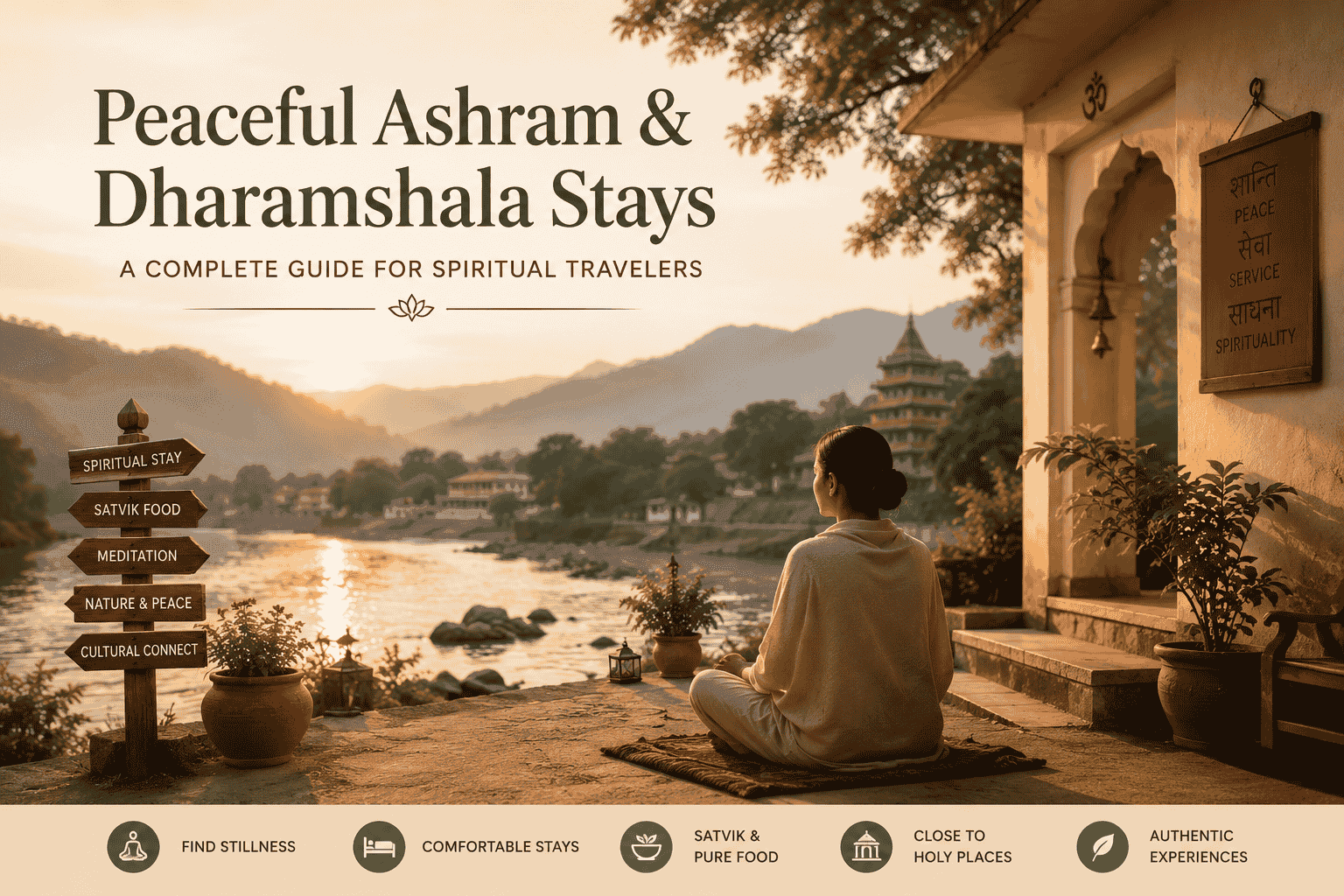
The Counterintuitive Truth: Why Silence is a Skill, Not a Location
You're sitting in a meditation hall in the Himalayan foothills at 4:00 AM. The external world is objectively silent — yet your internal noise is deafening. This is the "Arrival Shock" of mindful travel. The mistake almost everyone makes is treating silence as a geographic destination rather than a cognitive capacity: physical isolation actually amplifies mental chatter once external distractions disappear.
In practice, stillness is a skill developed through ritual and environment. At Omji, we curate stays in sacred hubs like Varanasi and Ayodhya where the environment supports this transition. A "quiet" ashram can be more stressful than a busy city if you haven't prepared for the vacuum of sound. True silence — Mauna — is the ability to remain unreactive to your own internal monologue, regardless of whether a temple bell is ringing outside.
Feature | Geographic Silence (The Trap) | Skill-Based Stillness (The Goal) |
|---|---|---|
Dependency | Thick walls or remote hills | Breath and ritual (Sadhana) |
Fragility | Broken by a single barking dog | Persists through external chaos |
Mental state | Waiting for the world to be quiet | Allowing the world to be as it is |
Result | Temporary relief, then frustration | Long-term nervous system regulation |
FAQ — Why does my mind feel louder during a retreat than at my desk? Your brain is experiencing "sensory deprivation rebound" — once city noise and notifications disappear, your usually-masked internal dialogue becomes the primary signal. Treat this loudness as a diagnostic tool, not a sign the retreat isn't working.
The 'Austerity Trap': Correcting the Myth of Unhygienic Spiritual Stays
Spiritual merit isn't measured by dust mites on your pillow. The "Austerity Trap" — believing growth requires enduring unhygienic conditions — is a modern misreading of Vairagya (detachment). Authentic spiritual discipline requires a clear mind, which is nearly impossible while battling a stomach bug from poorly laundered linens.
At Omji, we verify properties in destinations like Ayodhya and Varanasi so a budget room still provides sanitized linens, filtered water, and scrubbed floors. A dedicated spiritual stay is often cleaner than a mid-range commercial hotel: where a hotel treats cleaning as a labor cost to minimize, an ashram run on Seva treats it as part of the ritual itself.
Feature | Typical Budget Hotel | Omji Verified Ashram |
|---|---|---|
Linens | Patterned polyester (hides stains) | Bleached white cotton |
Water | Bottled or tap | High-yield RO filtration |
Atmosphere | Fluorescent, high-traffic | Quiet, minimalist, satvik focus |
Maintenance | Reactive | Ritualistic daily deep-cleaning |
FAQ — Can I expect private, modern bathrooms in a traditional dharamshala? Most modern, verified dharamshalas now feature private, tiled bathrooms with Western-style toilets and hot water — physical discomfort shouldn't be a distraction from your Sadhana. Check for "Satvik-certified" tags to confirm.
FAQ — Is the food safe for sensitive palates? The satvik diet follows strict purity rules — food is prepared fresh daily without onion, garlic, or heavy oils — which significantly lowers the risk of foodborne illness compared to a standard restaurant kitchen.
Find a verified, hygienic ashram for your next pilgrimage at Omji.
Ashram vs. Dharamshala: Choosing Your Degree of Quietude
The distinction is a choice between a curriculum and a basecamp. An ashram is a laboratory for the self — days often begin with a 4:30 AM bell, with Mauna (silence) enforced during meals. A dharamshala is a sanctuary for the weary — larger multi-bed rooms and communal kitchen access, without a pre-dawn chanting schedule, better suited to families.
Feature | Ashram | Dharamshala |
|---|---|---|
Interaction | Low (internal focus) | High (social, communal) |
Schedule | Rigid, mandatory Sadhana | Flexible, self-directed |
Cost | Program-based or donation | Fixed nightly rate |
Privacy | Often shared, austerity-focused | Family-centric, private rooms |
The mistake almost everyone makes is assuming a dharamshala will be quieter because it's "traditional." In busy hubs like Varanasi or Vrindavan, dharamshalas are often bustling with pilgrims trading stories and logistics — if total sensory deprivation is your goal, a dharamshala will disappoint. For families with children, though, an ashram's strict silence protocols can feel restrictive, making the dharamshala the better fit.
The Omji Standard: Essentials for a Verified Spiritual Stay
Most online listings function as mere aggregators, leaving you to navigate the "last mile" of a pilgrimage alone. A high price in Varanasi or Ayodhya guarantees proximity, not hygiene. To be Omji-approved, a property must pass a rigorous checklist that includes a non-negotiable 100% pure-vegetarian rule — any outside meat or eggs on premises disqualifies it — verified by local ground teams physically present in each city.
Feature | Standard OTA Booking | Omji-Verified Stay |
|---|---|---|
Verification | User reviews (often outdated) | Physical on-site audit |
Dietary sanctity | "Vegetarian friendly" | 100% satvik, pure-vegetarian |
Check-in support | Remote customer service | On-ground coordinator |
Ritual access | Self-guided or external vendors | Integrated Seva/Bhandara booking |
The most critical "amenity" isn't Wi-Fi — it's the removal of friction. When food, cleanliness, and entry are already handled, you can actually engage with the ritual rather than manage a budget stay's failures.
FAQ — What if a property doesn't meet standards on arrival? Our local ground team can relocate guests or fix hygiene issues — fresh linens, sanitization — within 60 minutes, since we maintain a physical presence in hubs like Vrindavan and Uttarkashi.
Activity | Primary Benefit | Duration | Tip |
|---|---|---|---|
Gauseva | Sensory grounding | 45–60 min | Wear clothes you don't mind getting dusty |
Bhandara | Community merit | 2–3 hrs | Book 48 hrs ahead for the freshest produce |
Mantra chanting | Mental focus | 30 min | Use a mala to keep the physical mind occupied |
Find your sanctuary and book your next verified stay at Omji.co.in.
Geographic Gems: Where to Find True Quietude
Proximity to a temple doesn't guarantee peace — often it guarantees construction-site decibels. Real quietude lives in "acoustic shadows" created by rivers and elevation.
Uttarkashi: Skip the "town side" drone of traffic and stay near Ujeli or Tiloth, where the Bhagirathi's flow creates a natural 50–60 decibel white noise that masks chatter and traffic.
Varanasi: Staying right at Dashashwamedh for "peace" is a rookie error — 4 AM loudspeaker aartis will wake you. Look toward Kedar Ghat or the southern stretch near Assi instead, in dharamshalas tucked a few turns into the galis, where thick stone walls cut noise significantly.
Ayodhya: With redevelopment around Ram Path, the center is busy. Properties near Mani Parvat or Guptar Ghat sit outside the main "temple bell radius" while staying close enough for an easy walk to darshan.
Destination | Acoustic Profile | Strategy | Buffer |
|---|---|---|---|
Uttarkashi | River-dominant white noise | Stay across Jhula Pul | 500m from highway |
Varanasi | Intermittent high-decibel bells | Choose galis with turns | 400m from Dashashwamedh |
Ayodhya | Traffic/construction noise | Guptar Ghat riverside fringe | 2km from Ram Janmabhoomi |
FAQ — How far should I stay from a temple for 8 hours of sleep? A property under a 15-minute walk from a major temple is within the peak noise zone — a minimum 2km radius is safer if unbroken sleep matters more than proximity.
Packing and Etiquette for First-Timers
Traveling with intention, not just light, matters here. Three items separate a prepared practitioner from an unprepared tourist: white cotton clothing, a copper water bottle (the Tamra Jal tradition), and a silent vibrating alarm, since an audible 4 AM phone alarm is disruptive in a shared hall.
The threshold rule matters too: remove shoes at your own room's door, not just the prayer hall, and align them neatly pointing away — a small practice of a disciplined mind.
Category | Avoid | Pack Instead |
|---|---|---|
Footwear | Laced sneakers | Slip-on sandals |
Personal care | Heavily scented products | Unscented, biodegradable soap |
Daily wear | Yoga leggings/compression gear | Loose-fit cotton kurtas |
Tagged